Land and site prep for a modular home
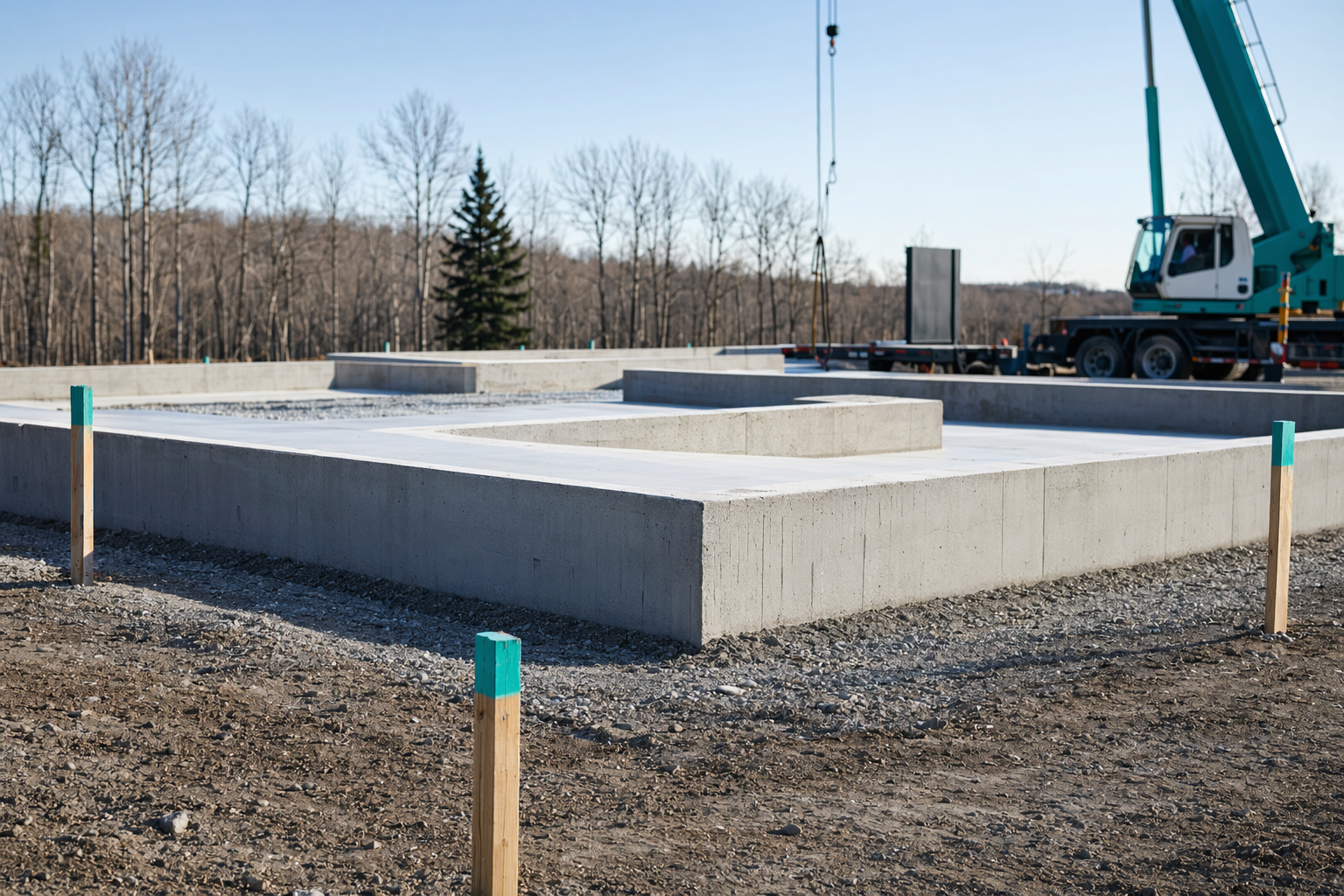
Before a modular home arrives, the land has to be ready. Site prep can affect price, timing, and even which home designs will work, so it helps to understand the steps early.
A free matching service — not a builder · You compare and choose · 10 languages
Before a modular home arrives, the land has to be ready. Site prep can affect price, timing, and even which home designs will work, so it helps to understand the steps early.
Land and site prep is the work needed before your modular home can be set on its foundation. It usually includes checking the land, planning access, preparing the building area, and making sure utility connections can be completed.
For most homeowners, this part is less visible than choosing a floor plan, but it matters just as much. A beautiful home model still needs the right foundation, safe delivery access, permits, and a site that can handle drainage, grading, and utility work.
If you are still comparing home types, see modular home options, ADU builders, and home models.
If you do not own land yet, slow down and verify the basics before you buy. Not every lot can easily support a modular, prefab, manufactured, or ADU project.
It is also smart to ask about easements, flood zones, HOA rules, and road maintenance. Get important answers in writing from the local building department, utility providers, or other qualified local sources.
Most modular projects follow a similar order, although the exact scope depends on the land and the builder. This is one reason timelines can vary from one project to another.
After the modules are set, the project still needs finish work. That may include joining sections, roofing tie-ins, siding repairs, utility hookups, porches, steps, garages, driveways, and final inspections.
You can learn more about the overall process at how it works and guides.
The biggest surprises usually come from the land, not the box of the house. Even two similar homes can need very different site work.
Steep slopes, poor soil, rock, high water tables, septic needs, long utility runs, tree removal, retaining walls, or limited truck access can all add work. Weather can also delay excavation, concrete, delivery, or crane scheduling.
This is why it is important not to assume a land-ready price from a model alone. Ask each builder exactly what is included and what is excluded. Confirm who handles permits, foundation work, utility trenches, set-day coordination, and finish work after the home is placed.
If you want help comparing local options, get matched for free. ModPath Homes is a free matching and guide service. You compare builders yourself, then confirm scope, price, timeline, license, and insurance directly with the builder in writing.
Ask clear questions before you sign anything. Some builders handle more of the site work, while others focus mainly on the home and set.
Good questions to ask include: Who is responsible for permits? Who orders the soil test if needed? Who builds the foundation? Who coordinates utility connections? What access is required for trucks and crane setup? What finish work is included after set day?
Also ask for a written scope of work. It should clearly separate the home package from site work, foundation, delivery, crane, utility hookup, and any items not included. That makes builder quotes easier to compare.
If you are early in planning, ModPath Homes can help you compare experienced local builders through our free matching service. Start at get matched or read more about cost factors.
No. Many homeowners start talking to builders before they buy land. That can help you understand what kind of lot may work for your home, delivery access, foundation, and utility needs.
It depends on the builder and the project. Some builders manage more of the process. Others expect the homeowner to hire local contractors for parts of the work. Always ask who is responsible for permits, foundation, utility work, and final site grading, and get that scope in writing.
Many modular homes can be placed on a slab, crawlspace, or basement, depending on the design, local code, engineering, and site conditions. The right choice depends on your land and the home plan.
Not always. Quotes vary. Some prices cover mainly the home, delivery, and set. Others may include more. Ask for a written item-by-item breakdown so you can see what is included, what is excluded, and what may still depend on land conditions.
Free for homeowners. Project and contact details only. You compare builders and choose who to hire.