A free matching service — not a builder · You compare and choose · 10 languages

ModPath Homes
☰ Menu
Build path

Backyard ADU Builders

Backyard ADU Builders

An ADU, or accessory dwelling unit, is a small home on the same property as a main house. ModPath Homes is a free matching service that helps you learn your options and compare local builders for backyard ADUs, modular ADUs, prefab ADUs, and manufactured homes where allowed.

What a backyard ADU is

A backyard ADU is a second, smaller home built on the same lot as your main home. People use ADUs for parents, adult children, guests, a caregiver, or rental income where local rules allow it.

ADUs can be built in different ways. Some are modular homes built in sections at a factory and set on a foundation. Some are panelized or site-built. In some areas, a manufactured home may be allowed, but zoning and utility rules vary.

The right choice depends on your land, local code, access to the backyard, utility connections, and your budget. A free match can help you compare builders who work in your area.

How ModPath Homes helps

ModPath Homes is not a builder, manufacturer, contractor, architect, or licensed building professional. We are a free matching and guide service. We help you understand common ADU paths and connect with builders near you so you can compare options.

You stay in control. You decide who to contact, who to hire, and what type of ADU fits your property. Before you sign anything, ask each builder to confirm the full scope, price, timeline, warranty, and payment schedule in writing.

If you are ready to compare local options, start here: Get matched. You can also review how it works before you begin.

Common ADU building paths

Backyard ADUs are not all the same. The best path depends on your city or county rules, your lot layout, and how much site work is needed.

  • Modular ADU. Built in factory-made modules, then delivered and set by crane on foundation day.
  • Prefab or panelized ADU. Built from factory-made wall or roof panels, then assembled on site.
  • Site-built ADU. Built mostly on your property by a local contractor.
  • Manufactured home as ADU. Allowed in some places, not allowed in others. These homes follow the federal HUD code, while modular homes usually follow state or local residential code such as the IRC.

A builder can tell you what they offer, but you should also verify that the design meets your local zoning and permit rules. You can explore more home types at /services/modular-homes/ and browse ideas at /models/.

What to check before you hire a builder

A good ADU plan starts with the property. Even a small backyard home may need surveys, setbacks, utility upgrades, drainage work, driveway or access review, and foundation planning. Foundation types may include a slab, crawlspace, or sometimes a basement, depending on the design and site.

Ask each builder clear questions:

  1. Is this ADU allowed on my lot under current local rules?
  2. What is included in the contract, and what is not included?
  3. Who handles permits, utility connections, and site work?
  4. What happens if access is tight for delivery or crane set day?
  5. What license and insurance do you carry in my state?

Always verify the builder's license and insurance yourself. Read the contract carefully. Make sure change orders, allowances, and payment terms are written clearly before work starts.

Budget, permits, and financing

ADU costs vary a lot. The home itself is only part of the total project. Land conditions, grading, utility runs, permits, foundation work, delivery, crane access, and local labor can change the final price.

Permits also vary by city and county. Some places are ADU-friendly. Others have strict rules about size, height, setbacks, parking, owner occupancy, or separate utility meters. A local builder or design team can explain the permit path for your address.

Financing may include cash, home equity products, refinance options, or a construction-to-permanent loan if available. Some buyers also ask about personal property or chattel loans for certain home types, but loan products depend on the home, land, and lender rules. Read more in our guides and costs pages, then get matched to compare builders near you.
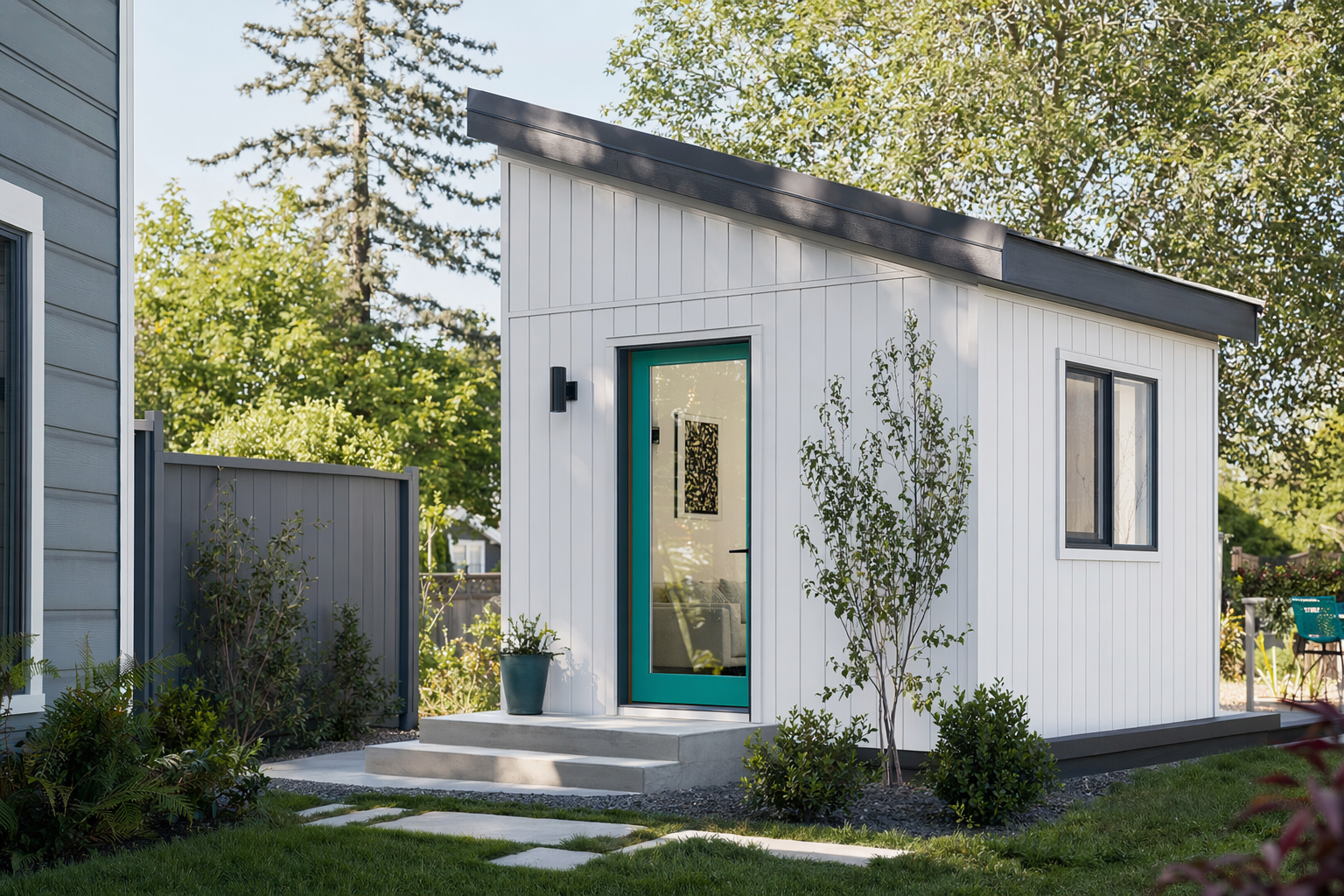
In plain English: A backyard ADU is a small second home on your property. We help you compare local builders for free, but you should verify permits, license, insurance, price, and timeline yourself before hiring anyone.

Common questions

Can I put an ADU in my backyard?

Maybe. It depends on your local zoning, lot size, setbacks, utility access, and other city or county rules. Some areas allow detached ADUs more easily than others. A local builder can review your address, but you should also confirm rules with your planning or building department.

Is a modular ADU the same as a manufactured home?

No. A modular ADU is usually built to state or local residential code, often based on the IRC, then placed on a permanent foundation. A manufactured home is built to the federal HUD code. Some areas allow one type but not the other as an ADU, so always check local rules.

How long does a backyard ADU take to build?

There is no one timeline. Design, permits, site work, utility upgrades, factory production, weather, inspections, and builder schedules can all affect timing. Ask each builder for a written project schedule and ask what could cause delays.

Does ModPath Homes build the ADU for me?

No. ModPath Homes does not build homes or provide licensed construction services. We are a free matching service that helps you compare local builders and learn the process. You choose who to hire, and you should confirm scope, price, timeline, license, and insurance directly with that builder.

Keep reading

Free tool

Start your free match

Free for homeowners. Project and contact details only. You compare builders and choose who to hire.

Get matched — free