Modular home build timeline
A modular home is built in stages. Some work happens in a factory, and some happens on your land. The full timeline depends on design choices, permits, site work, factory production, delivery, and the builder you hire.
A free matching service — not a builder · You compare and choose · 10 languages
A modular home is built in stages. Some work happens in a factory, and some happens on your land. The full timeline depends on design choices, permits, site work, factory production, delivery, and the builder you hire.
A modular home timeline is not just factory build time. It starts before production, with planning, land review, design, budget, permits, and builder selection. It also continues after delivery, with set day, utility connections, interior finish work, inspections, and final approvals.
Many homeowners are surprised that land and permit work can take as much time as the factory stage, or more. Weather, utility companies, local rules, financing, and site conditions can all affect the schedule.
ModPath Homes is a free matching and guide service. We help you compare experienced builders near you, but you choose who to hire. Always confirm scope, price, timeline, license, and insurance in writing with the builder.
This first stage is where many important decisions happen. You may compare floor plans, decide between a one-story or two-story layout, review your land or lot, and talk through foundation options such as slab, crawlspace, or basement.
If you are still learning the basics, see how it works or browse modular home options. If you want help comparing local companies, you can use our free builder matching service.
Common tasks in this stage include: - checking zoning and setback rules - confirming whether modular homes are allowed on the lot - reviewing access for trucks and a crane - discussing floor plan changes and standard features - talking about financing, including construction-to-permanent loans if needed - getting written estimates for site work, delivery, set, and finish work
After you choose a builder and home model, the plan usually moves into engineering, approvals, and permit paperwork. Local requirements matter here. A modular home is built to state or local residential code, usually based on the IRC, not the HUD code used for manufactured homes.
At the same time, the site may need clearing, grading, excavation, foundation work, driveway access, and utility planning. This is often called site work. It can include water, sewer or septic, electric, and sometimes gas.
Some delays happen in this stage because permits are handled by local offices, and utility schedules are outside the builder's control. If your land has slope, poor soil, trees, rock, floodplain issues, or limited road access, the work may take longer.
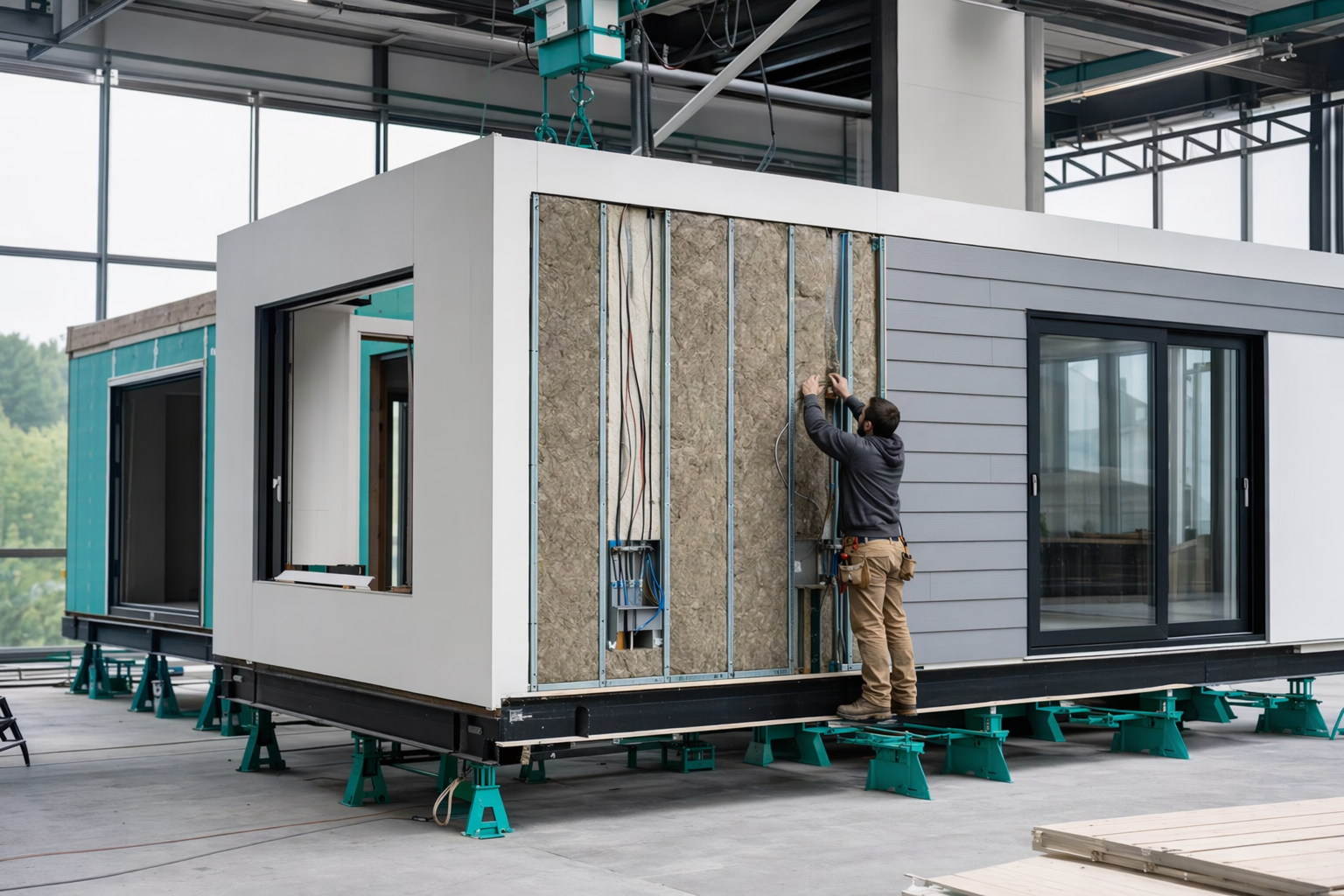
Once plans are approved for production, the home modules are built in a factory. This indoor process can reduce weather delays during framing and many interior steps. Factory crews build floors, walls, roofs, and much of the interior before the sections are shipped.
When the modules are ready, they are delivered to your site. A crane usually lifts each section onto the foundation. This is often called set day. It is a major milestone, but it is not the end of the project.
After the set, crews still need to finish the home on site. That can include joining modules, sealing roof areas, completing siding and trim connections, hooking up utilities, finishing drywall at marriage lines, installing steps or porches, and completing inspection items.
The last stage includes all the work needed to make the home ready for occupancy. Final details may include flooring touch-ups, paint, cabinets, appliances, HVAC startup, plumbing and electrical completion, exterior grading, and cleanup.
Then the home typically goes through final inspections. The local authority may issue a certificate of occupancy or similar approval before move-in. Your contract should explain what the builder includes, what happens if materials are delayed, and who is responsible for permits, utility connections, and punch-list items.
Before you sign, ask direct questions: 1. What is included in the builder's timeline, and what is not? 2. Who handles permits and inspections? 3. What site work is priced separately? 4. What could delay delivery or set day? 5. What warranties apply, and who provides them?
Every project is different. A simple plan on a ready-to-build lot may move faster than a custom design on difficult land. The biggest schedule changes often come from permit review, financing, weather, utility coordination, material availability, and site conditions.
A few examples that can affect the timeline: - custom floor plan changes - foundation issues or bad soil - septic design or well approval - road weight limits or tight truck access - HOA rules or local design review - change orders after production starts - lender document requirements
The best way to protect yourself is to get a clear written contract and ask for a step-by-step schedule. Compare more than one option if you can. ModPath Homes is a free matching service, so you can review builders near you and choose the one that fits your project best.
There is no single timeline that fits every project. The total time depends on design choices, permits, land conditions, factory scheduling, delivery, site work, and the builder's process. Ask each builder for a written schedule that shows planning, permits, production, set day, finish work, and final inspections.
It can be, especially because much of the home is built indoors while site work may happen in parallel. But faster is not guaranteed. Permit delays, utility work, financing, and difficult site conditions can still slow the project down.
The home sections arrive by truck and are lifted onto the foundation by crane. Crews align and secure the modules, then begin connection and weatherproofing work. You still need follow-up work after set day before the home is ready for move-in.
We do not build homes or give binding prices or schedules. ModPath Homes is a free matching and guide service. We help you compare builders, then you choose who to hire and confirm the scope, price, timeline, license, and insurance directly with that builder.
Free for homeowners. Project and contact details only. You compare builders and choose who to hire.