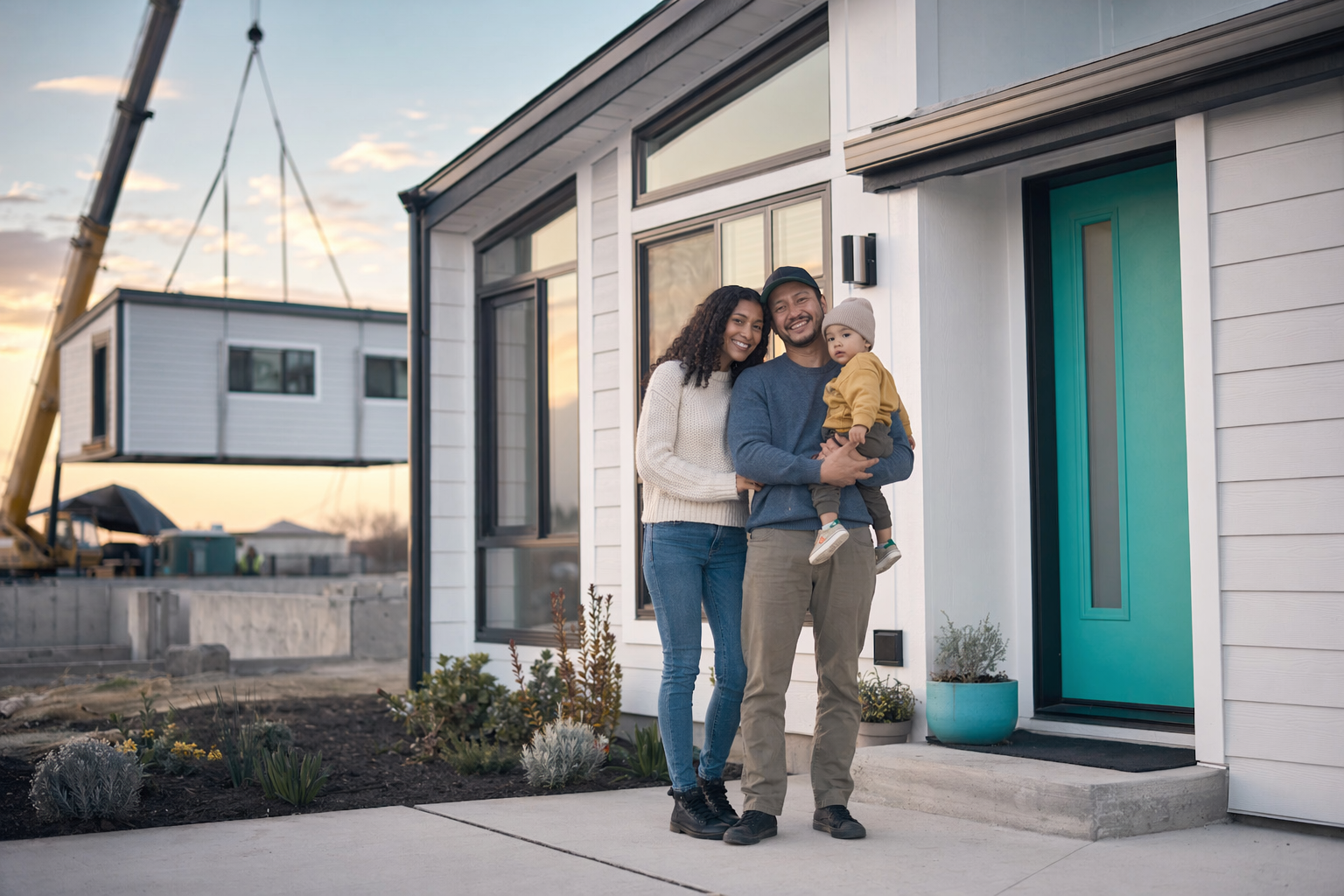
This anonymized story shows how one new-immigrant family used ModPath Homes to learn their options and get matched with builders for a modular home project. It is an example only. Costs, timing, approvals, and final results vary by land, design, site work, builder, and local rules.
Why this family looked at modular
The family had been renting for years and wanted more space and stability. They were also working through a new language, a new school system, and a new housing market. They wanted a simpler path to understand how a home could be planned and built.
They started looking at modular homes because they liked the idea of factory-built sections, called modules, being set on a permanent foundation. They also wanted to compare that option with other factory-built homes and ADUs. They used ModPath Homes as a free matching and guide service to learn the basics and connect with local builders.
The family did not just need a floor plan. They needed help understanding the full project.
What kind of home fit their land and budget range
Whether local zoning and permits might allow the plan
How site work, utilities, and foundation costs could affect the project
How to compare builder quotes, scope, and timing in writing
What questions to ask about license, insurance, and experience
They also wanted a builder who could explain things clearly and be patient with questions. That mattered as much as the home design itself.
ModPath Homes helped them organize their goals and get matched with builders near them. The family still had to compare options and decide who to hire themselves.
How the planning process moved forward
After getting matched, the family spoke with more than one builder. They learned that modular homes are usually built to the state or local residential code, often based on the IRC, while manufactured homes are built to the federal HUD Code. That helped them understand why financing, foundations, and placement can work differently.
One builder explained the main steps in simple terms:
Pick a model or start with a plan.
Confirm land facts, zoning, and utility access.
Review site work, foundation type, and delivery access.
Finalize pricing, contract scope, and permit responsibilities.
Build the modules in a factory and prepare the site.
Set the home by crane on set day, then finish interior and exterior work on site.
The family also learned that a home price is only one part of the total project. They reviewed cost guides and asked each builder to separate the home itself from site work, permits, utility hookups, foundation, transport, crane work, and finish work.
What made the match useful
The biggest benefit was not a promise of a cheaper or faster build. It was getting a clearer starting point. Instead of calling random companies, the family could focus on builders who worked in their area and on the type of project they wanted.
They used the builder meetings to ask practical questions about slab, crawlspace, and basement foundations, delivery routes, and what happens after crane set day. They also asked who handles permits, who manages inspections, and what punch-list items are common near the end of the job.
Most important, they kept everything in writing. They asked for written scope details, payment terms, estimated timelines, and change-order rules. They also verified the builder's license and insurance themselves before moving ahead. If you are starting a similar project, you can get matched for free and compare your options.
What other homeowners can learn from this example
This story is one example, not a guarantee. The family's project moved ahead because they asked questions early, compared more than one builder, and paid attention to land, permits, and site work, not just the floor plan.
A few lessons stood out:
Learn the difference between modular, prefab, manufactured, and ADU projects
Ask what is included in the contract, and what is not
Confirm who handles permits, utility coordination, and inspections
Expect site conditions to matter a lot
Verify license and insurance yourself before signing
If you are in the early planning stage, ModPath Homes can help you understand your options and connect with experienced builders. It is a free matching service. You compare, ask questions, and choose who to hire. Start with guides or get matched.
In plain English: This family did not need a sales pitch. They needed clear information, good questions, and a way to compare builders. That is the main value of using a free matching service like ModPath Homes.
Common questions
Was this a real family and a real project?
This is an anonymized illustrative project story based on common homeowner needs and the kinds of steps many families go through. It does not identify any real person, property, or company. It is meant to educate, not promise a specific result.
Does ModPath Homes build homes or give construction quotes?
No. ModPath Homes is not a builder, manufacturer, contractor, architect, or licensed building professional. It is a free matching and guide service that helps homeowners learn about modular, prefab, manufactured, and ADU options and connect with builders near them.
Can a new-immigrant family get a modular home even if English is not their first language?
Many families can move forward successfully, but the process still takes careful review. It helps to ask for simple written explanations, bring a trusted interpreter if needed, and compare more than one builder. Always confirm scope, price, timeline, and responsibilities in writing with the builder.
Will modular always be faster or cost less than site-built?
Not always. Some parts of the process can be more efficient, but total cost and timing depend on the home design, factory schedule, land, permits, foundation, utilities, weather, builder workload, and local rules. Ask each builder for a detailed written breakdown and review what is included.