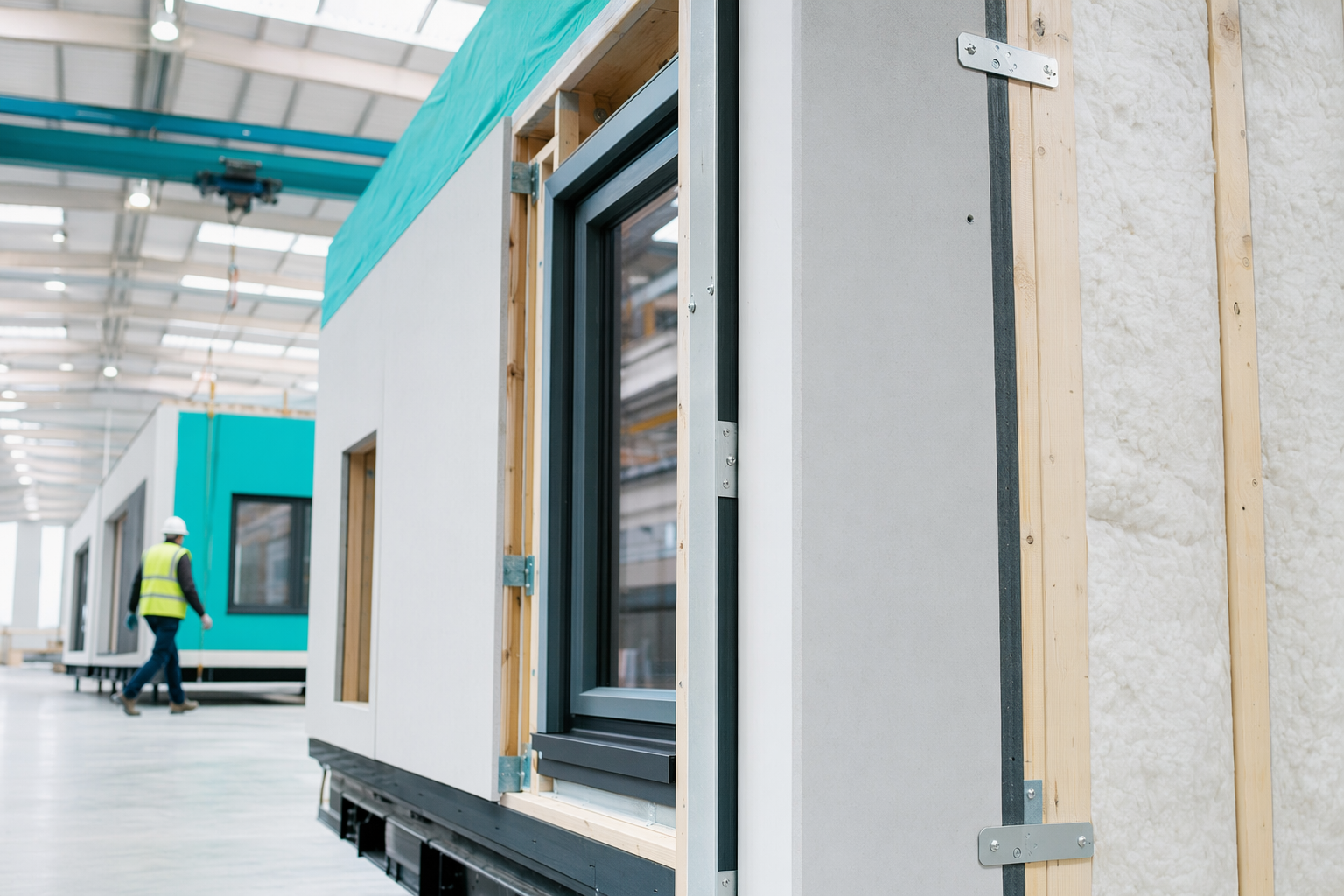
A modular home can be very energy efficient, but efficiency depends on more than the factory build. The design, insulation, air sealing, windows, HVAC system, climate, and site work all matter. ModPath Homes is a free matching and guide service that helps you compare experienced builders near you.
What “energy efficient” means in a modular home
Energy efficiency means the home uses less energy to stay comfortable. In a modular home, that can come from good insulation, tight air sealing, efficient heating and cooling, and smart window placement.
A modular home is built in sections, called modules, in a factory and then set on a foundation at the home site. Most modular homes are built to the same state and local code as site-built homes, usually the IRC. That is different from a manufactured home, which is built to the federal HUD code.
Factory construction can help with quality control because materials are built indoors and protected from weather. But a modular home is not automatically efficient. You still need to review the wall system, roof insulation, windows, duct design, and the builder's installation details.
The main features that affect energy use
Some parts of the home have a bigger impact than others. Ask builders to explain these items in plain language and put the final scope in writing.
Insulation levels in the roof, walls, and floor
Air sealing around seams, wiring, plumbing, rim areas, and where modules join
Windows and doors, including glass type, frame quality, and weatherstripping
HVAC equipment, such as heat pumps, furnace efficiency, and duct sealing
Water heating, including heat pump water heaters in some homes
Ventilation, like bath fans or balanced fresh-air systems
The home site matters too. Shade, wind exposure, foundation type, orientation, and local climate can change performance. A slab, crawlspace, or basement can each affect insulation and air leakage in different ways.
Factory build helps, but the site still matters
People sometimes think the factory does everything. It does not. A big part of energy performance depends on what happens after the modules leave the plant.
The set crew, crane day, foundation work, and finish connections all matter. If the marriage line between modules is not sealed well, air can leak. If ducts, plumbing penetrations, or attic areas are not finished carefully, efficiency can drop.
Site work also affects comfort and utility bills. Poor drainage, an uninsulated crawlspace, or gaps around utility entries can hurt performance. This is one reason to compare experienced local builders through get matched and ask who handles factory work, transport, set, finish, and warranty items.
Questions to ask before you choose a builder
Use simple questions. You do not need to be an engineer. A good builder should be able to explain the home clearly.
What code is this home built to in my area?
What insulation levels are included in the base price?
How are the module seams air sealed on site?
What windows and HVAC system are included?
Is ductwork inside conditioned space or outside it?
What foundation types do you offer, slab, crawlspace, or basement?
Who handles permits, inspections, and utility connections?
What items are not included in the quote?
Ask for written specifications, not just sales talk. Then compare those details side by side. You can also review how it works and explore modular home services before choosing who to hire.
How to compare options without guessing
Start with the same floor plan or a similar size home if possible. Then compare insulation, windows, HVAC, ventilation, and foundation details, not just the headline price. A cheaper quote may leave out site work, utility hookups, permits, steps, porches, or upgrades that affect efficiency.
If you are also considering a small backyard home, many of the same energy questions apply to an ADU. You can read more about ADU builders and browse guides and models for ideas.
ModPath Homes does not build homes or quote final project pricing. We are a free matching service. You compare builders, confirm scope, price, and timeline in writing with the builder, and verify the builder's license and insurance yourself.
In plain English: A modular home can be energy efficient, but it is not automatic. The best plan is to compare written specs, ask simple questions, and choose a qualified local builder carefully.
Common questions
Are modular homes more energy efficient than site-built homes?
Sometimes, but not always. A modular home can perform very well because factory construction may improve consistency and reduce weather exposure during framing. But the final result still depends on insulation, air sealing, windows, HVAC design, site installation, and the builder's workmanship.
Is a modular home the same as a manufactured home for energy rules?
No. Most modular homes are built to state and local residential code, usually the IRC, like many site-built homes. Manufactured homes are built to the federal HUD code. The code path affects design, inspections, transport, and installation details.
What upgrades usually matter most for efficiency?
Homeowners often focus on bigger windows or finish materials, but core items usually matter more. Ask first about insulation, air sealing, duct sealing, HVAC equipment, ventilation, and the quality of the foundation and module-seam details. The right choices depend on your climate and the home design.
Can ModPath Homes tell me what my utility bills will be?
No. Utility costs vary by climate, home size, thermostat settings, rates, insulation package, equipment, and how the home is installed. ModPath Homes is a free matching and guide service. We help you compare builders, but you should confirm written specs and discuss expected performance directly with the builder.