A free matching service — not a builder · You compare and choose · 10 languages

ModPath Homes
☰ Menu
Guide

Modular home floor plans explained

Modular home floor plans explained

A modular home floor plan is the layout of rooms, doors, windows, and living spaces in a home that is built in sections at a factory and finished on your land. The plan affects how the home looks, how it fits your lot, and how easy it is to build, deliver, and set with a crane.

What a modular floor plan really means

A floor plan is more than a sketch of rooms. It shows bedroom count, bathroom locations, kitchen layout, hallway space, storage, window placement, and how people move through the home.

With modular construction, the plan also has to work as a buildable set of factory-made modules. That means the design must account for module size, transport limits, crane set day, and how the sections connect on the foundation.

Modular homes are usually built to the same state or local code as many site-built homes, often based on the IRC. That is different from HUD Code manufactured homes. If you are still comparing types, see guides or modular homes.

How modular plans are different from site-built plans

Some layouts are easier to build as modules than others. Open living areas, simple roof lines, and stacked plumbing can help. Very complex shapes, many corners, or unusual spans may add design and install challenges.

A modular floor plan also has to fit the land. A plan that looks good online may not work well on a narrow lot, a sloped site, or land with setback limits, septic limits, or HOA rules.

Ask these questions early: - Will the modules fit local roads and the site entrance? - Does the lot allow the home's width, length, and height? - What foundation is planned, slab, crawlspace, or basement? - Are there site limits for garage placement, porch depth, or stairs?

You can browse ideas on models, but confirm what is actually available and allowed with the builder and your local building office.

Common modular floor plan options

Most homeowners start with lifestyle needs first. Think about who will live there now, who may live there later, and how private or open you want the spaces to feel.

Common plan choices include: - Ranch or single-story layouts for easier day-to-day access. - Two-story layouts for smaller lots. - Split-bedroom plans for more privacy. - Open kitchen, dining, and living areas for shared space. - Flex rooms for office, guests, or play space. - In-law or ADU-style layouts where local rules allow.

If you want a small second home on the same property, read about ADU builders. ADUs have their own zoning, utility, and permit questions, so a floor plan that works in one town may not work in another.

How to choose a floor plan for your land and budget

Start with the basics. Know your land, your household size, and your must-haves. Then separate needs from wants. That makes it easier to compare plans without getting stuck on finishes or marketing photos.

A good short list often includes three things. Room count, overall size range, and a layout style you like. After that, ask each builder what is included in their scope, what is optional, and what site work is not included.

  1. Check zoning, setbacks, and utility needs.
  2. Ask what foundation types the plan can use.
  3. Confirm what parts are factory-built and what parts are site-built.
  4. Ask how porches, garages, dormers, and roof changes affect the design.
  5. Get scope, price, and timeline in writing from the builder.

ModPath Homes is a free matching service. We help you compare builders near you, but you choose who to hire. You should verify the builder's license and insurance yourself and confirm all details in writing. If you want help getting started, use get matched.

Mistakes to avoid when comparing modular plans

Do not compare floor plans by square footage alone. Two homes with similar size can feel very different because of hallway space, ceiling shape, storage, window placement, and bedroom separation.

Do not assume the plan price covers everything. Land prep, grading, permits, foundation work, utility connections, transport, crane set, steps, decks, garages, and finish details may be separate. Financing can also differ. Some buyers use construction-to-permanent loans, while some homes or situations may involve other loan types.

Also, do not assume every plan can be built in every area. Local code, wind zone, snow load, energy rules, flood requirements, and delivery access all matter. Before signing, ask the builder what is included, what is excluded, and what must be approved before the home is ordered.

If you want help comparing options, see how it works or get matched.
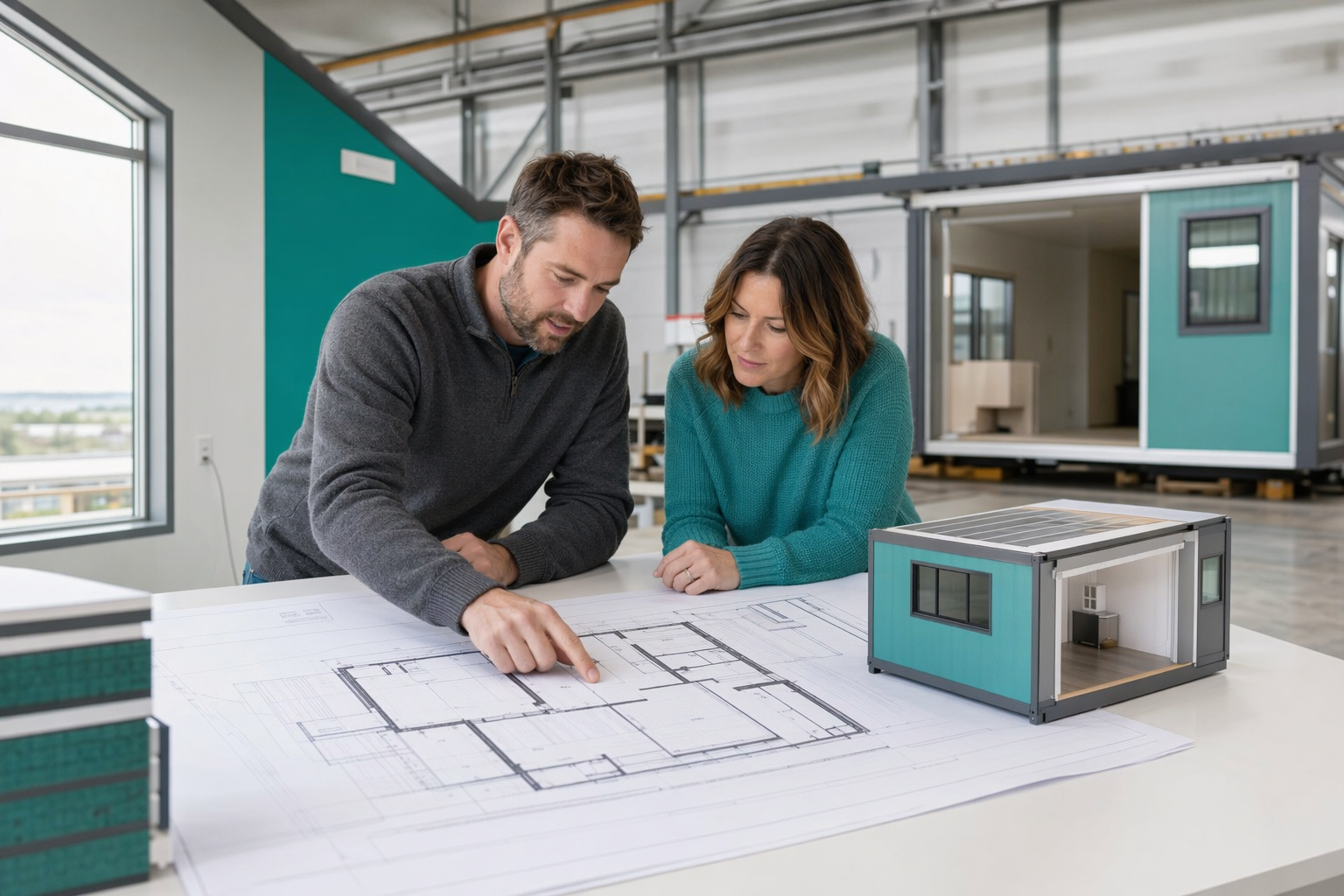
In plain English: A good modular floor plan is not just about looks. It has to fit your life, your land, local rules, and the builder's real construction process.

Common questions

Can I change a modular home floor plan?

Sometimes, yes. Many builders offer standard plans with options, and some allow larger custom changes. But not every change is practical in a modular design. Structural needs, transport size, roof design, and plumbing layout can affect what is possible. Ask the builder which changes are allowed and get the revised scope and price in writing.

Is a modular floor plan the same as a manufactured home plan?

No. Modular homes and manufactured homes are different building types. Modular homes are typically built to state or local code, often based on the IRC, then set on a permanent foundation. Manufactured homes are built to the federal HUD Code. The floor plans can look similar, but the code, installation rules, financing options, and local acceptance may differ.

What floor plan works best for a narrow lot?

There is no one best plan for every narrow lot. Two-story plans, smaller footprints, rear garages, and simpler shapes may help, but local setbacks, height limits, parking rules, and utility placement matter. A builder should review your survey, zoning limits, and site access before saying a plan will work.

Does ModPath Homes design floor plans or build homes?

No. ModPath Homes is not a builder, manufacturer, contractor, architect, or licensed building professional. We are a free matching and guide service that helps you compare experienced home builders near you. You choose who to hire, and you should verify license, insurance, scope, price, and timeline yourself.

Keep reading

Free tool

Start your free match

Free for homeowners. Project and contact details only. You compare builders and choose who to hire.

Get matched — free