What Is a Crane Set Day?
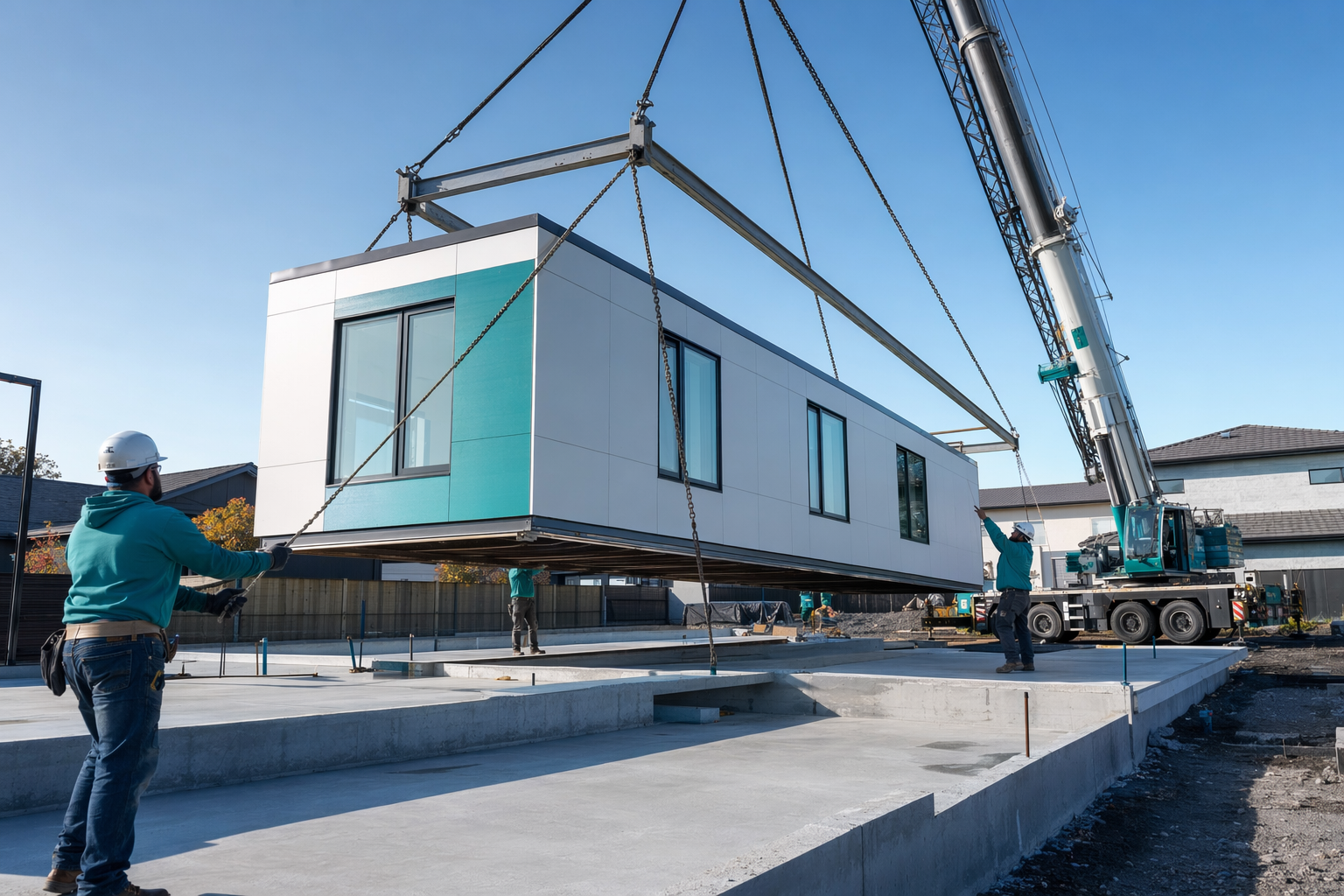
A crane set day is the day a crane lifts modular home sections, or other large prefab parts, onto the foundation. It is a big milestone, but it is only one step in the full homebuilding process.
A free matching service — not a builder · You compare and choose · 10 languages
A crane set day is the day a crane lifts modular home sections, or other large prefab parts, onto the foundation. It is a big milestone, but it is only one step in the full homebuilding process.
For a modular home, the builder and set crew bring the factory-built sections to your site on trucks. A crane then lifts each section off the truck and places it on the foundation.
The crew lines up the sections, joins them together, and secures them to the foundation and to each other. This work must follow the home plans, the engineer details, and local code requirements.
If you are building an ADU or another prefab structure, the set may involve full modules, wall panels, roof sections, or other large parts. The exact process depends on the design and the builder's system.
A successful set day depends on a lot of work that happens before the crane arrives. The foundation usually must be complete and checked for the correct size, height, and anchor details.
The site also needs safe access for trucks and the crane. That can include driveway access, firm ground, room to stage materials, and enough clearance from trees, power lines, fences, and neighboring structures.
Common items that should be ready include: - permits and required approvals - the finished foundation, such as a slab, crawlspace, or basement - site work like grading, drainage, and access - utility planning for water, sewer or septic, gas, and electric - a crane plan and delivery plan from the builder or set crew
Before you hire anyone, ask who is responsible for each item and get the scope in writing. You can also use ModPath Homes as a free guide and get matched with builders to compare how they handle set day planning.
Homeowners often ask if the whole home is finished in one day. Usually, no. The lifting and placing of modules may happen in a short time, sometimes within a day or two, but the full project continues after that.
After the set, crews still need to complete "button-up" work. This can include sealing roof and wall connections, finishing the marriage line where modules meet, connecting utilities, adding stairs or porches, and completing interior and exterior details.
Weather, site conditions, inspections, road access, and crane scheduling can all affect the plan. Confirm the expected sequence, not just the set date, with the builder in writing.
Set day is important because it shows the home moving from transport to installation. It is one of the most visible parts of modular construction, and many homeowners remember it as the day the house really starts to look real.
It also matters because mistakes can be expensive and hard to fix later. The foundation must match the modules. The crane must have proper access. The crew must place and secure everything correctly.
This is one reason it helps to understand the difference between factory work and site work. You can learn more in our guides and compare project types like modular homes and ADU builders.
Use simple, direct questions. You do not need construction experience to ask for clear answers.
ModPath Homes is a free matching service. We are not the builder or installer. We help you compare experienced companies near you, but you should confirm scope, price, timeline, license, and insurance yourself before signing any contract. See how it works or get matched to start.
Mostly, yes, but the idea can apply to other prefab projects too. Modular homes often use a crane to place full sections on the foundation. Some prefab or ADU projects may use cranes for large wall panels, roof sections, or other heavy components.
No. Set day is a major milestone, but it is not usually the end of the project. After the set, crews often still need to finish connections, weatherproofing, interior seams, utility hookups, inspections, and site-built items.
Yes. Wind, rain, snow, poor ground conditions, or unsafe site access can delay crane work. Ask the builder what their delay plan is and who is responsible for rescheduling costs or coordination.
That depends on the project. In many cases, the modular builder or general contractor arranges the crane and set crew. Always ask who is responsible, get the scope in writing, and verify the builder's license and insurance yourself.
Free for homeowners. Project and contact details only. You compare builders and choose who to hire.